Right vs. Right Now
Why Clarity Beats Assumption Every Time
About 25 years ago, during a restaurant management training program, I found myself working in the kitchen for a new opening. It was my first real taste of life on the line: hot, chaotic, fast, and fueled by adrenaline.
I was shoulder to shoulder with the executive chef, Alison, and directly across from the corporate executive chef. Picture Gordon Ramsay, just without the accent.
Halfway through the night, things were flying. Tickets were coming in faster than we could plate them. I was in full “hang on and try not to mess up” mode. Every few minutes, the corporate chef barked questions over the noise:
“How long on the salmon?”
“Where’s my steak?”
“Dawson, that risotto ready yet?”
After a while, I leaned toward Alison and said quietly, “How do I get this guy to stop yelling?”
Without missing a beat, she said, “That’s easy. Just ask him if he wants it right or right now.”
So, I did.
I looked across the line and said, “Chef, do you want it right or right now?”
He didn’t hesitate.
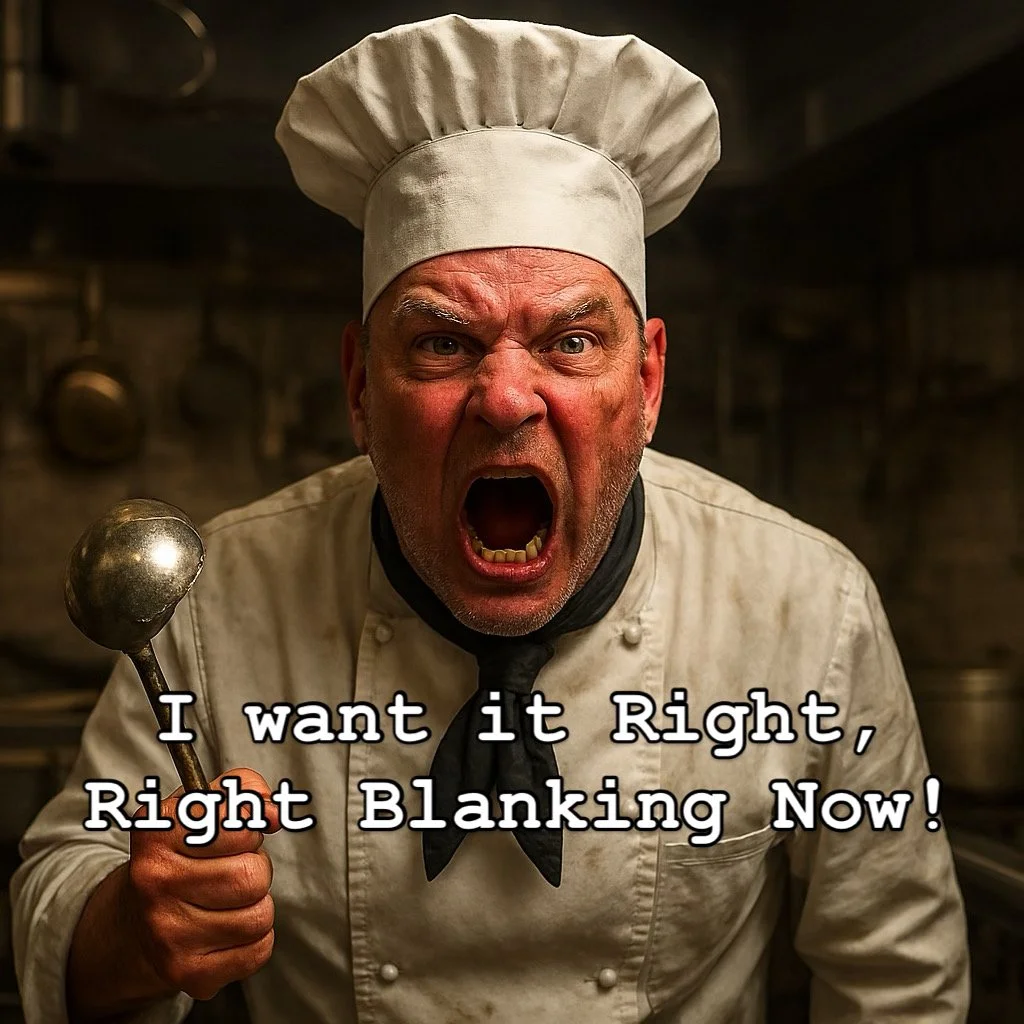
“Dawson, I want it right! Right blanking now!”
Alison was on the floor laughing. And I learned my first big kitchen lesson, one that has followed me ever since.
Right vs. Right Now
That night became one of my favorite stories to tell, partly because it’s funny, but mostly because it’s true. Every industry has its version of this moment.
Someone wants it done right.
Someone else wants it done now.
And somewhere in between, the temperature starts to rise.
So often, conflict doesn’t come from disagreement. It comes from unclear expectations. One person values accuracy. Another values speed. Both are trying to succeed, but they are operating from different definitions of success.
Decision-Making Isn’t One Size Fits All
In my work with leaders and teams, I see this dynamic every day. Some people are naturally decisive. They move quickly, make choices on instinct, and course-correct later. Others need to think, gather context, and process before acting.
Then there’s another group, the ones who describe themselves as decisive but really aren’t. They look quick from the outside, but deep down, they need time to process before they feel confident in their decision.
When those styles collide, friction builds. The “right now” people get frustrated by what feels like hesitation. The “right” people feel rushed, unheard, or dismissed. Both lose patience, and productivity follows.
Take It to the MAT
Over time, I started using a simple framework that helps align expectations before frustration builds. I call it the MAT, which stands for Mutually Agreeable Timeline.
Before you start a project, conversation, or decision, ask:
What does “right” look like for both sides?
What does “right now” actually mean?
Where’s the middle ground that honors both?
The MAT creates shared understanding. It shifts the focus from assumption to alignment. When you define success together, you reduce stress, increase trust, and keep everyone focused on the outcome instead of the tension.
Whether it’s a leadership team planning strategy or a club department preparing for a big event, the same principle applies. You don’t have to choose between right and right now. You just need to agree on what “done” looks like and when it needs to happen.
Different Pages, Same Goal
Looking back, it’s clear that the corporate chef and I weren’t on the same page that night. He was focused on execution in the moment. I was trying to learn and keep up. Both of us were doing our jobs, just from different perspectives.
By the way, his name was Matt. Matt, if you’re reading this, I still owe you an order of risotto.
Today, I don’t work in kitchens anymore, but I spend a lot of time observing them. The lessons are still the same. Pressure reveals expectations. And communication, not speed, determines success.
So now, when I think about that kitchen or any high-pressure situation, I still hear his voice in my head: “Right! Right blanking now!”
And I smile, because it reminds me how often conflict can be avoided with a simple question, a little curiosity, and a shared MAT.
Right or right now?
That’s where clarity begins.